Lee Skip Hire Health and Safety Policy
 Purpose: This Health and Safety Policy sets out the commitments and procedures for Lee Skip Hire as a professional rubbish company and skip hire operator. It explains how we manage safety across waste collection, skip delivery, and site operations, and describes responsibilities for management, staff, and contractors. Our objective is to protect people, property and the environment while delivering high quality waste removal and skip services. This policy applies to all personnel while performing duties on behalf of the skip hire business and to anyone affected by our operations.
Scope and applicability: The policy covers routine refuse collection, bulky waste removal, skip placement and collection, vehicle loading and offloading, and storage of waste prior to disposal. It includes work performed at customer premises, public highways, and on our own facilities. The policy is designed to align with applicable health and safety obligations and best practice for waste handling, but it is not a replacement for specific statutory guidance — instead it sets out our company-level approach to safety in a general service area for rubbish removal.
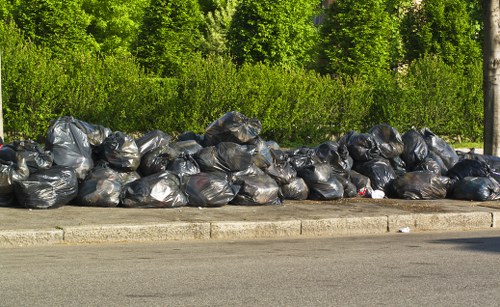 Leadership and responsibilities: Senior management are responsible for maintaining and promoting a safe culture across the business. Managers must ensure that risk assessments are carried out and that safe systems of work are implemented. All employees must follow instructions, use necessary safety equipment, and report hazards. Contractors and temporary staff engaged in waste removal activities are required to comply with this policy. We emphasise training, supervision, and competent oversight to reduce injury and harm during skip hire operations.
Risk assessment and control measures
Risk assessments are conducted for routine tasks including skip loading, lifting operations, vehicle movements, and manual handling of rubbish. Where risks are identified, we adopt hierarchies of control: elimination, substitution, engineering controls, administrative controls, and personal protective equipment (PPE). Example control measures include securing skip locations, using mechanical aids for heavy loads, and segregating hazardous materials from general waste to prevent contamination and fire risks.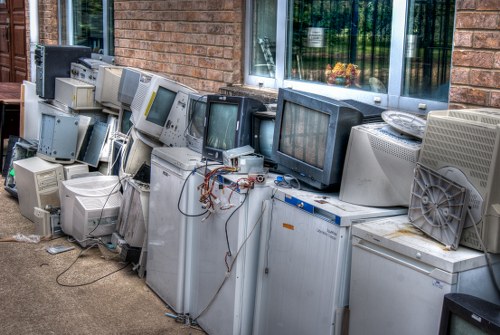
Training, competence and PPE
All personnel receive job-specific training on safe skip handling, safe driving practices for commercial vehicles, and emergency procedures. Staff must wear appropriate PPE such as high-visibility clothing, gloves, eye protection, and steel-toe footwear when required. Training records are maintained and reviewed periodically to ensure competence. We use toolbox talks and practical demonstrations to reinforce safe behaviours for the rubbish collection and waste removal workforce.Vehicle and plant safety is critical for a waste collection company. Vehicles are inspected and maintained according to schedules, loads are secured to prevent spillage during transport, and drivers follow safe loading limits and route planning. Forklifts, tail lifts, and other lifting equipment are operated only by trained personnel and checked before use to prevent mechanical failure and accidents.
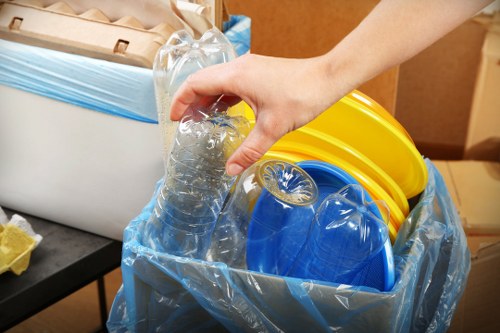 Hazardous and special wastes: Hazardous materials such as asbestos, chemicals, batteries, and contaminated soils require specialist handling and disposal. Our skip hire service is set up to identify potential hazardous loads before collection. When hazardous waste is suspected, collections are suspended until a safe course of action is agreed and appropriate licensed carriers or disposal facilities are engaged. We maintain documentation on waste classification and follow regulatory requirements for controlled materials while aiming to minimise risk at every step.
Reporting, record keeping and incident management form an integral part of this policy. Employees must report near-misses, accidents, or unsafe conditions without delay. All incidents are investigated to identify root causes and to prevent recurrence. We keep records of risk assessments, training, vehicle inspections, incident reports and corrective actions. These records support continual improvement and help demonstrate compliance with our obligations.
Monitoring and audit: Regular internal audits and safety inspections are conducted to verify that procedures are effective and followed. Performance indicators such as accident rates, near-miss reports and maintenance completion are monitored. Management reviews this policy annually or when operational changes occur to ensure it remains suitable for the scope of our rubbish services and evolving legal expectations.
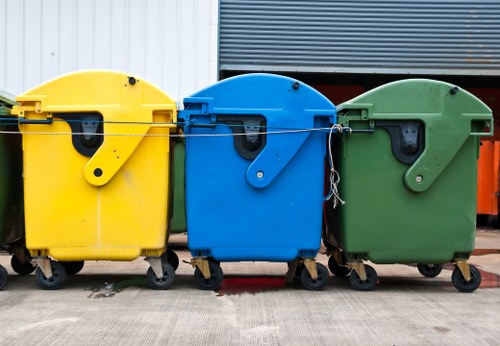 Emergency procedures and first aid: Emergency plans are in place for incidents including vehicle collisions, fires, chemical spills and major injuries. Staff are trained in emergency response steps and first aid provision is available at our sites and in vehicles where appropriate. We coordinate with emergency services as necessary and ensure access routes are kept clear to facilitate rapid response. This ensures that our waste collection and skip hire operations are resilient to unforeseen events.
Engagement and wellbeing: We encourage staff participation in safety committees and welcome suggestions to improve working practices in the waste and rubbish handling environment. Mental and physical wellbeing of personnel is recognised as a safety factor, and support mechanisms are provided to help employees manage work-related stress and fatigue associated with vehicle-based operations.
Review and continuous improvement: This policy is reviewed at least annually and updated when required by operational changes, new hazards, or legal updates. We commit to continuous improvement through training, investment in safer equipment, and adoption of best practices for waste collection, rubbish removal and skip hire services. By embedding safety into everyday operations we aim to protect our workforce, customers and the communities where we operate.